
Your damp proof course.
What it does. What needs checking.
A DPC protects a wall against rising ground moisture. Low-level damp does not automatically mean yours has failed. Start with the existing barrier, the building and any routes around it.
Does this look
familiar?
Start with what you can see. These signs help describe the concern; they do not establish the diagnosis on their own.
How a damp survey worksDamp above skirting level
A prompt to examine the moisture source, rather than immediate proof of DPC failure.
Raised paving or soil
Outside levels may provide a moisture route above an existing course.
Render across the course
A continuous finish can bridge a barrier that remains intact.
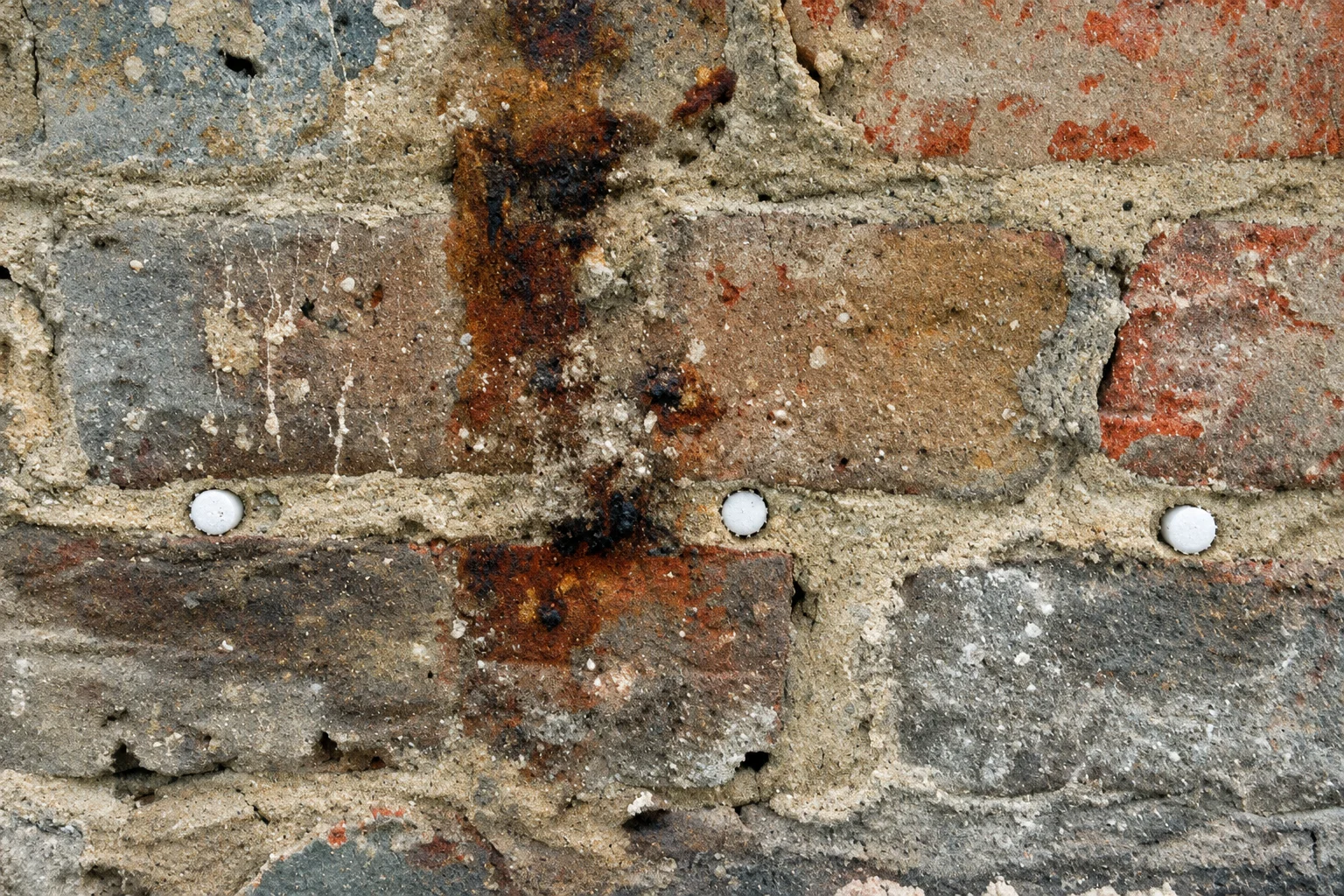
Previous damp treatment
Old injection holes show work was attempted; they do not establish today’s cause.
What is a damp proof course?
Find the cause.
Then choose what it needs.
A damp proof course is a barrier within a wall intended to interrupt the upward movement of ground moisture. Older buildings may use slate or bituminous materials; later construction may use flexible membranes. A remedial injected course uses a suitable product within the masonry.
A DPC in a wall is different from a damp proof membrane beneath a floor and from below-ground waterproofing. Understanding which protection is present helps avoid specifying the wrong treatment.
Not sure?
Show us.
Tell us what you are seeing, your postcode and when it started. Photos can help narrow down the concern and decide whether a physical survey is the next step.
Photos cannot confirm hidden defects or replace a physical investigation where one is needed.
Read the building.
Not just the mark.
A moisture reading is one piece of evidence. The materials, distribution, repair history and possible moisture routes need to be considered together.
For physical investigations outside the buyer / seller service, scope and any charge are agreed before booking.
Explore ThinkDRY damp surveys- 01
Locate the course
Identify the visible barrier where possible and compare it with external ground and internal floor levels. Its position varies with construction.
- 02
Look for bypass routes
Inspect render, debris, altered ground levels and floor connections. A bridge and a failed barrier require different decisions.
- 03
Check the building material
Thickness, rubble, voids and mortar continuity matter when considering whether a remedial injected course would be suitable.
The right work.
For the actual cause.
Correct the bypass where appropriate
Where an intact DPC is bridged, dealing with the bridge and related drainage or finish may be more relevant than adding another barrier. The investigation should explain the reasoning.
Specify a remedial course only when justified
If rising ground moisture is established and existing protection is inadequate, a remedial DPC may be considered. Explore the dedicated injection guide for installation, suitability, plaster repairs and drying.
What else
could it be?
Penetrating moisture
A wall wet after rain needs the rainwater route investigated.
Explore the guidance 02 / ANOTHER STARTING POINTCondensation
Surface moisture and mould do not prove the wall’s DPC is defective.
Explore the guidance 03 / ANOTHER STARTING POINTAnother source
Leaks and floor junctions can create similar low-level symptoms.
Explore the guidanceKnowledge before
treatment.
Show us
Send photographs and describe the symptoms.
Assess
Consider the pattern, history and possible causes.
Investigate
Arrange a physical survey where appropriate.
Explain
Discuss the findings, limits and next step.
Treat
Choose work supported by the diagnosis.
Clear explanations.
A considered next step.
Understand the reason for a proposed repair before deciding what to have done.
Meet ThinkDRYAlan P’s Trustpilot review of 14 May 2026 describes DPC work in a Victorian terrace, an explanation of the work and advice on subsequent decoration.
Alan P · Trustpilot · 14 May 2026. Customer review summary.
Read the original reviews on TrustpilotYour next step.
In the right direction.
Damp proof injection
Understand when an injected course may be appropriate.
Explore damp proof injection 02 / RELATED GUIDANCERising damp
Understand the signs of ground moisture.
Explore rising damp 03 / RELATED GUIDANCEDamp surveys
See how ThinkDRY investigates the cause.
Explore damp surveysBased in Thurlstone, South Yorkshire, ThinkDRY considers enquiries across Sheffield and Yorkshire. Send the full postcode to confirm coverage and arrangements.
Your damp proof course
questions.
Eight answers to help you choose a sensible next step.
What is a damp proof course?
It is a barrier within a wall designed to interrupt moisture rising from the ground through masonry. Physical and remedial injected courses achieve this in different ways.
Where is the DPC located in a wall?
It is generally near the base of an above-ground wall. The location and visibility depend on the building. External levels, render or later alterations can obscure it, so its position should be checked on site.
How do I know if my damp proof course has failed?
Symptoms alone are insufficient. Establish whether moisture is rising from the ground, identify the existing protection and check whether it is bridged before concluding it has failed.
Can an existing DPC be bridged?
Yes. Raised ground, paving, render, debris or changes at floor level can allow moisture to bypass protection. The actual route needs investigating.
What is a chemical or injected DPC?
It is a remedial treatment installed into suitable masonry to create resistance to rising moisture. Product selection and installation depend on the construction and the established cause.
Does a failed DPC always need replacing?
First establish whether failure is the right diagnosis. A bridge or another moisture source may require a different repair. Where protection is inadequate, suitable remedial options can be discussed.
How long does a remedial DPC last?
Durability depends on the system, masonry, installation and site conditions. Ask for the specific product information and any applicable guarantee in writing with the quotation; a universal lifespan should not be assumed.
Can ThinkDRY assess whether my DPC may be causing the damp?
Send photos, your postcode and previous treatment details for an initial assessment. A physical investigation may then be needed to establish the moisture route and suitability of any work.
Let’s find out
what’s causing it.
A DPC protects a wall against rising ground moisture. Low-level damp does not automatically mean yours has failed. Start with the existing barrier, the building and any routes around it.
Understand the principle.
A drier home.
A clearer next step.
Get a free initial photo assessment. Tell us what you’re seeing and we’ll discuss the right next step.
Based in Thurlstone, serving Sheffield and Yorkshire.
Buying or selling? Physical damp surveys cost £199, deducted from subsequent remedial work carried out by ThinkDRY.
Request your free photo assessment
Tell us about the damp in your property and we’ll help you understand the next step.
Fields marked * are required. Photographs are optional.