
Damp chimney breast?
Look beyond the stain.
Rain entry, condensation and salts can leave similar marks around a chimney. The stack, roof junction, flue and internal finishes all deserve consideration.
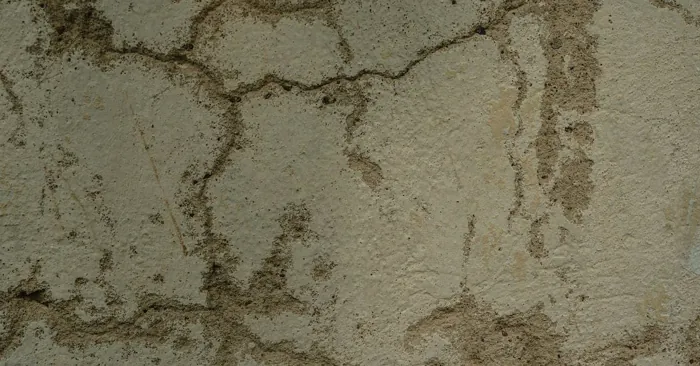
Does this look
familiar?
Start with what you can see. These signs help describe the concern; they do not establish the diagnosis on their own.
How a damp survey worksStains after rain
A patch changes following wet or windy weather.
Persistent discolouration
Marks remain despite decorating or earlier roof repairs.
Salts or affected plaster
Surface deposits or finishes that repeatedly deteriorate.
An unused or closed flue
A change in use or ventilation may be relevant to condensation.
Why can a chimney breast become damp?
Find the cause.
Then choose what it needs.
A chimney connects exposed external masonry, a roof junction and an internal flue. Moisture can enter through stack defects or flashing, form through condensation, or interact with salts left by historic use. More than one mechanism may be involved.
The position of the stain, whether the chimney is used or blocked, previous repairs and changes after rain help shape the investigation. Damp on an upper-floor chimney breast should not simply be labelled rising damp.
Not sure?
Show us.
Tell us what you are seeing, your postcode and when it started. Photos can help narrow down the concern and decide whether a physical survey is the next step.
Photos cannot confirm hidden defects or replace a physical investigation where one is needed.
Read the building.
Not just the mark.
A moisture reading is one piece of evidence. The materials, distribution, repair history and possible moisture routes need to be considered together.
For physical investigations outside the buyer / seller service, scope and any charge are agreed before booking.
Explore ThinkDRY damp surveys- 01
Review the stack and roof junction
Consider flashing, pointing, cracks and top details. High-level inspection and any roofing work require appropriate safe access.
- 02
Understand flue use and ventilation
Discuss whether the chimney is active, capped or blocked and when alterations were made. Never alter a working flue as a damp remedy without appropriate specialist advice.
- 03
Assess salts and moisture together
Some salts attract moisture from humid air. Meter readings and surface staining need interpretation alongside materials, history and weather patterns.
The right work.
For the actual cause.
Treat the established mechanism
A roof or stack defect needs the relevant repair. A condensation issue requires consideration of flue and room conditions. Salt-affected finishes may need a separate repair plan once ongoing water entry is addressed.
Do not redecorate into uncertainty
Covering the mark without finding its cause can leave the problem unresolved. Review what was repaired previously and whether the pattern changed before specifying further work.
What else
could it be?
Rain penetration elsewhere
Compare other wet patches and external defects.
Explore the guidance 02 / ANOTHER STARTING POINTCondensation in the room
Cold surfaces and indoor humidity may be part of the picture.
Explore the guidance 03 / ANOTHER STARTING POINTUncertain or mixed causes
Choose an investigation rather than assuming one treatment.
Explore the guidanceKnowledge before
treatment.
Show us
Send photographs and describe the symptoms.
Assess
Consider the pattern, history and possible causes.
Investigate
Arrange a physical survey where appropriate.
Explain
Discuss the findings, limits and next step.
Treat
Choose work supported by the diagnosis.
Clear explanations.
A considered next step.
Understand the reason for a proposed repair before deciding what to have done.
Meet ThinkDRYIainD’s Trustpilot review of 8 July 2025 describes reassuring advice, useful options and neat, tidy work.
IainD · Trustpilot · 8 July 2025. Customer review summary.
Read the original reviews on TrustpilotYour next step.
In the right direction.
Penetrating damp
Choose the guidance that matches your concern.
Explore penetrating damp 02 / RELATED GUIDANCEDamp surveys
See how ThinkDRY investigates the cause.
Explore damp surveys 03 / RELATED GUIDANCENot sure what type of damp?
Choose the guidance that matches your concern.
Explore not sure what type of damp?Based in Thurlstone, South Yorkshire, ThinkDRY considers enquiries across Sheffield and Yorkshire. Send the full postcode to confirm coverage and arrangements.
Your chimney damp
questions.
Eight answers to help you choose a sensible next step.
Why is my chimney breast damp?
Possible causes include rain entry through the stack or flashing, condensation, leaks and moisture-attracting salts. The construction, use and history need investigating together.
Why does the damp get worse after rain?
A weather-related pattern makes water entry worth checking, including the stack and roof junction. Water can travel within the construction, so the stain may not sit beside the defect.
Can chimney flashing cause damp?
Defective flashing can allow rain into the roof-to-chimney junction. It needs a suitable inspection with safe access rather than a diagnosis from an internal stain alone.
Can an unused chimney cause condensation?
Changes in use, ventilation and temperature can affect conditions in a flue. A blocked chimney may need specialist assessment; a working flue must not be altered without appropriate advice.
What causes salts on a chimney breast?
Historic combustion and moisture movement can leave salts in masonry and plaster. Some salts absorb moisture from humid air, affecting finishes and readings even where current rain entry is not the only issue.
Is damp on a chimney breast rising damp?
Not automatically. Consider the height, distribution, weather relationship, flue conditions and salts. A separate investigation is needed before recommending a DPC.
How is chimney damp investigated and treated?
Review internal symptoms, weather, previous repairs, stack and flashing condition, flue use and salts. Treatment should address the established cause, with any finish repairs planned separately.
What photographs should I send ThinkDRY?
Send wide and close internal views, the affected floor levels and exterior stack photos from safe ground level. Include whether the chimney is used and when the marks appear. Do not climb to obtain pictures.
Let’s find out
what’s causing it.
Rain entry, condensation and salts can leave similar marks around a chimney. The stack, roof junction, flue and internal finishes all deserve consideration.
Understand the principle.
A drier home.
A clearer next step.
Get a free initial photo assessment. Tell us what you’re seeing and we’ll discuss the right next step.
Based in Thurlstone, serving Sheffield and Yorkshire.
Buying or selling? Physical damp surveys cost £199, deducted from subsequent remedial work carried out by ThinkDRY.
Request your free photo assessment
Tell us about the damp in your property and we’ll help you understand the next step.
Fields marked * are required. Photographs are optional.